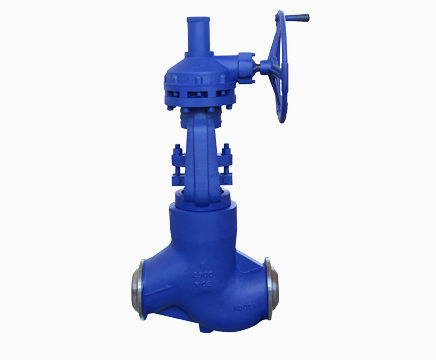
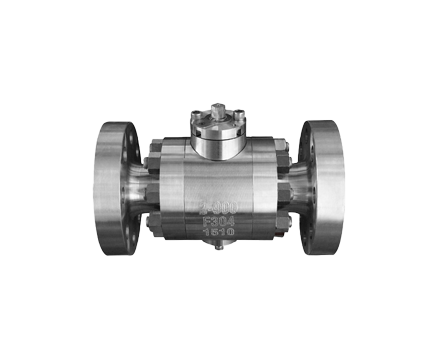
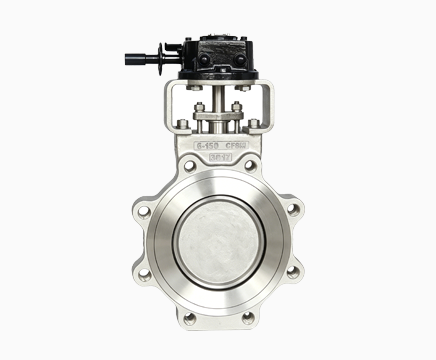
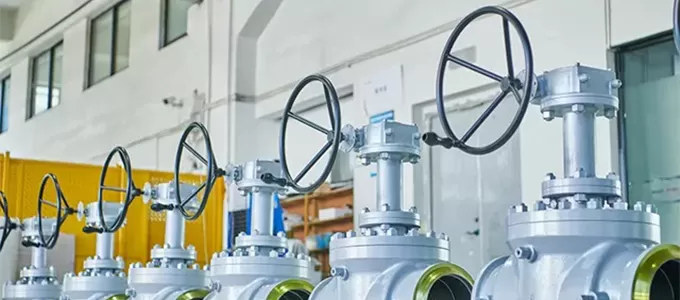
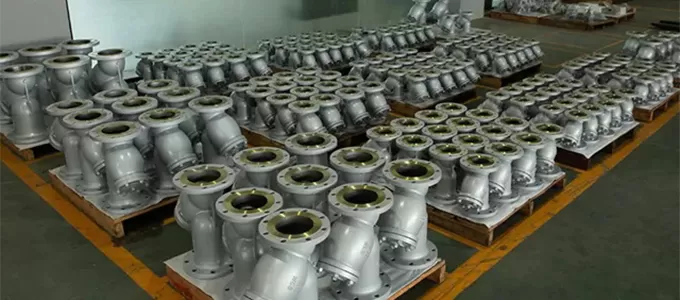
Annoyed by unstable flow regulation? Inaccurate pressure adjustment triggers various production malfunctions. Savvy’s high-precision globe valves completely resolve all fluid control troubles.
Globe valves surpass other valve types with finely adjustable flow throttling via parabolic disc and stem assemblies, delivering a flow control accuracy of ±1%—an essential performance indicator for all industrial production processes.
Unlike other valve varieties, our engineering-optimized globe valves deliver steady, predictable fluid regulation. Below is an overview of why they are indispensable for B2B pipeline systems.
Why Globe Valves Are Indispensable for Accurate Throttling and Flow Regulation in B2B Industrial Operations
Troubled by sudden pressure surges? Poor flow control wastes raw materials and endangers production equipment. Commercial and industrial sites demand precise, stable fluid regulation solutions.
Globe valves outperform other valve styles with delicate flow throttling realized through parabolic disc and stem structures, supporting ±1% flow control accuracy that is vital to industrial production workflows.
Advanced precision engineering addresses real production pain points:
Flow Control Performance Comparison Table
| Performance Index | Ball Valves | Gate Valves | Savvy Globe Valves |
|---|
| Throttling Precision | Poor adjustment capacity | Limited throttling range | High precision (1%–100% flow regulation range) |
| Maximum Flow Coefficient (Cv) | 325 | Low flow capacity | Adjustable up to 500 |
| Pressure Drop Regulation | Hard to adjust pressure loss | Obvious fixed pressure drop | Fine, controllable pressure drop adjustment |
| Potential for Stem Leakage | Medium leakage risk | High leakage risk | Minimal risk (equipped with bellows sealing) |
Power generation plants installed our globe valves and cut boiler feedwater fluctuation by 92%, avoiding thermal stress damage that previously cost $180,000 in annual repairs.
Pharmaceutical factories adopted our split-body globe valves to achieve precise dosing standards compliant with FDA regulations, maintaining full sanitary performance through repeated high-temperature sterilization cycles.
Paper mills eliminated inconsistent product quality by upgrading to our globe valves, which stabilize pulp concentration within a 0.5% tolerance to guarantee uniform finished paper production.
Core Features That Distinguish Industrial-Grade Globe Valves
Confused by vague product specification sheets? Conventional ordinary globe valves fail to meet strict industrial working conditions. The following key structural features determine long-term operational stability.
Industrial-grade globe valves must adopt forged valve bodies, pressure-balanced internal trim, and fully comply with ASME B16.34 standards. All our globe valves integrate these specifications alongside proprietary anti-cavitation structural designs.
Long service life is achieved through specialized industrial design:
Material Selection Guide
| Working Application | Valve Body Material | Seat & Internal Trim Material | Pressure Class Rating |
|---|
| High-Pressure Steam Pipeline | A217-WC9 Alloy Steel | Stellite 6 Hard Alloy | ASME Class 1500# |
| Corrosive Chemical Treatment | CF8M Stainless Steel | Tantalum Alloy | 600 PSI |
| Municipal Water Treatment System | Ductile Cast Iron | 316 Stainless Steel | 300 PSI |
| Ultra-Low-Temperature Cryogenic Service | LF2 Low-Temp Carbon Steel | Graphite Composite | ASME Class 600# |
Oil refinery operators confirmed our pressure-balanced internal trim reduced vibration-induced equipment damage by 70% after installation on core hydrocracking units.
Municipal water supply departments favor our rubber-seated globe valves, which pass AWWA C509 standard testing with zero leakage after 5,000 full open-close cycles.
Food processing facilities eliminated recurring maintenance issues by switching to our crevice-free sanitary globe valves, which remove hidden gaps where bacteria could multiply.
How to Select Suitable Globe Valves for Complex Fluid Pipeline Systems
Specifying valves based on guesswork leads to premature equipment breakdowns. This professional selection framework avoids costly specification mismatches.
Make selections based on four rigid criteria: flow characteristic type (equal percentage vs linear flow), pipe end connection form (flanged vs threaded), operating temperature range (with a ±25% safety margin), and throttling demand. Our in-house engineering team verifies all valve selection schemes.
Standardized selection rules for different industrial systems:
Application Selection Matrix
| Pipeline System Type | Recommended Body Material | Pipe End Connection | Matching Actuator Type |
|---|
| High-Temperature Steam System | Forged Alloy Steel | RF Raised Face Flange | Pneumatic Scotch-Yoke Actuator |
| Water Treatment Facilities | CF8M Stainless Steel | Wafer Flange | Electric Modulating Actuator |
| Corrosive Chemical Production Lines | Hastelloy C Alloy | RTJ Ring Joint Flange | Manual Gear Operator |
| HVAC Heating & Cooling Circuits | Bronze Alloy | Socket Welded End | Thermostatic Self-Actuated |
A power plant in Texas cut annual maintenance expenses by 55% after deploying our bellows-sealed globe valves on boiler feedwater pipelines to completely stop valve stem leakage.
European pharmaceutical manufacturers demand full material traceability documentation; our globe valves are delivered with complete material test certificates that satisfy PED 2014/68/EU pressure equipment regulatory standards.
Seawater desalination facilities standardized our super duplex stainless steel globe valves after three years of field testing, with zero chloride-induced stress corrosion cracking observed.
Conclusion
For industrial processes requiring precise fluid regulation, heavy-duty industrial globe valves deliver unmatched throttling accuracy through robust precision manufacturing. They stabilize fluctuating production parameters and guarantee consistent, reliable long-term pipeline operation.