For industrial pipeline projects, the choice between a floating ball valve and a trunnion ball valve depends mainly on pressure rating, valve size, operating conditions, and service requirements. A ball valve floating type is commonly used for small to medium-size pipelines with moderate pressure, while a trunnion ball valve is preferred for large-diameter pipelines, high-pressure applications, and critical services requiring stable operation.
Understanding the differences helps engineers and procurement teams select the right valve solution, reduce maintenance costs, and improve long-term pipeline reliability.
What is the difference between floating and trunnion ball valves?
The main difference is how the ball is supported inside the valve body.
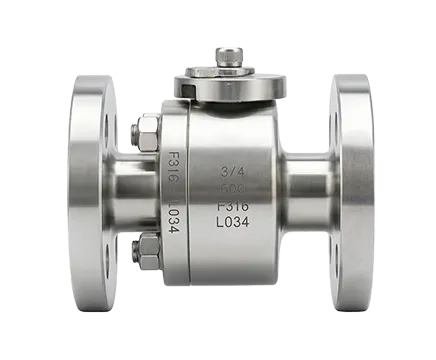
A floating ball valve has a ball that is not fixed by a stem support at the bottom. The ball moves slightly downstream when pressure pushes against it, creating a sealing force between the ball and the seat. This design provides excellent shut-off performance and is widely used in general industrial applications.
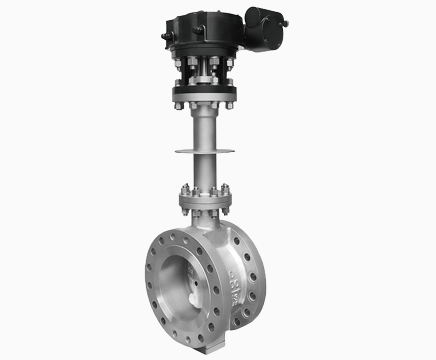
A trunnion ball valve uses an additional mechanical support system. The ball is fixed by a lower trunnion and rotates around a stable axis. This reduces operating torque and allows the valve to handle higher pressure and larger pipeline sizes.
When should you use a floating ball valve?
A floating ball valve is suitable for applications where compact design, reliable sealing, and cost efficiency are important.
Typical applications include:
Oil and gas auxiliary systems
Water treatment pipelines
Chemical processing equipment
General industrial fluid control
Low to medium pressure applications
The simple structure of a ball valve floating type makes it easier to manufacture, maintain, and replace. It is often selected for pipelines where valve size is relatively small and frequent operation is required.
When is a trunnion ball valve required?
A trunnion ball valve is designed for demanding pipeline conditions where high pressure, large diameter, and frequent operation are involved.
Its supported ball structure reduces the force transferred to the valve seats, resulting in:
Trunnion-mounted designs are commonly used in transmission pipelines, refineries, power plants, and other critical industrial facilities.
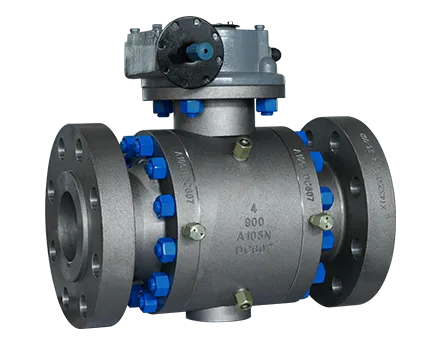
Which ball valve is better for high-pressure applications?
For high-pressure and large-diameter pipelines, trunnion ball valves are generally the preferred choice.
Because the ball is mechanically supported, the valve requires less torque to operate and experiences lower seat stress. This makes it more suitable for applications involving high pressure classes, frequent cycling, and automated control systems.
Floating ball valves can still perform well in lower pressure applications, but larger sizes may require higher operating torque and stronger seat designs.
How do I choose between a floating and trunnion ball valve for procurement?
Project procurement teams should evaluate several factors before selecting a valve:
1. Pipeline size and pressure rating
Small and medium pipelines usually use floating ball valves, while large pipelines with higher pressure requirements typically require trunnion designs.
2. Operating frequency
For frequent opening and closing operations, trunnion ball valves provide smoother operation and reduced mechanical stress.
3. Media characteristics
For demanding services involving gas, hydrocarbons, corrosive fluids, or extreme temperatures, a properly designed trunnion valve may provide better reliability.
4. Budget and lifecycle cost
Floating ball valves usually have lower initial costs. However, trunnion ball valves may offer better long-term value in critical applications due to reduced maintenance requirements.
Working with experienced ball valves suppliers helps ensure the selected valve meets project specifications, international standards, and operational requirements.
Conclusion
Floating and trunnion ball valves serve different industrial requirements. A ball valve floating type is an economical and reliable solution for small to medium pipeline applications, while a trunnion ball valve is engineered for high-pressure, large-diameter, and critical process systems.
For project procurement, selecting the correct valve design requires careful consideration of pressure, pipeline size, operating conditions, and lifecycle performance. Partnering with professional ball valve manufacturers and suppliers can help achieve safer operation, lower maintenance costs, and improved project efficiency.
FAQs
1. What is a floating ball valve used for?
A floating ball valve is mainly used for small to medium pipeline systems requiring reliable shut-off performance. It is widely applied in water, chemical, gas, and general industrial services.
2. Are trunnion ball valves better than floating ball valves?
Neither design is universally better. Trunnion ball valves are better for high-pressure, large-size, and critical applications, while floating ball valves are more suitable for compact systems with moderate operating conditions.
3. Why are trunnion ball valves more expensive?
Trunnion ball valves have a more complex structure, additional support components, and higher manufacturing requirements. The increased cost provides better performance under demanding operating conditions.
4. Can floating ball valves be used for high-pressure applications?
Yes, but their application is usually limited by valve size and operating pressure. For large high-pressure pipelines, trunnion ball valves are typically recommended.
5. What should I consider when choosing ball valves suppliers?
Consider manufacturing experience, product certifications, material selection, testing capabilities, customization support, and the supplier’s ability to meet project-specific requirements.